


LOLER Thorough Examinations: What They Are and How Often Your Forklift Needs One
If you operate forklift trucks, a thorough examination isn’t optional. It’s a legal requirement, and it’s one of the most important checks you can carry out to keep your operators, your site and your equipment safe.
But what does a thorough examination involve, how is it different from a service, and how often do you need one? Here’s what you need to know.
What are LOLER and PUWER?
Two sets of regulations apply to forklift trucks in the UK.
The Lifting Operations and Lifting Equipment Regulations 1998 (LOLER) cover equipment used to lift and lower loads. That includes the mast, forks, chains and any lifting attachments on your truck.
The Provision and Use of Work Equipment Regulations 1998 (PUWER) cover work equipment more generally. They apply to the rest of the truck, including the brakes, steering, tyres, lights and controls.
A thorough examination of a forklift checks the truck against both, so you can be confident it’s safe to use.
Is a thorough examination the same as a service?
No. The two are often confused, but they do different jobs.
A service is routine maintenance. It keeps your truck running efficiently, catches wear early and helps prevent costly breakdowns.
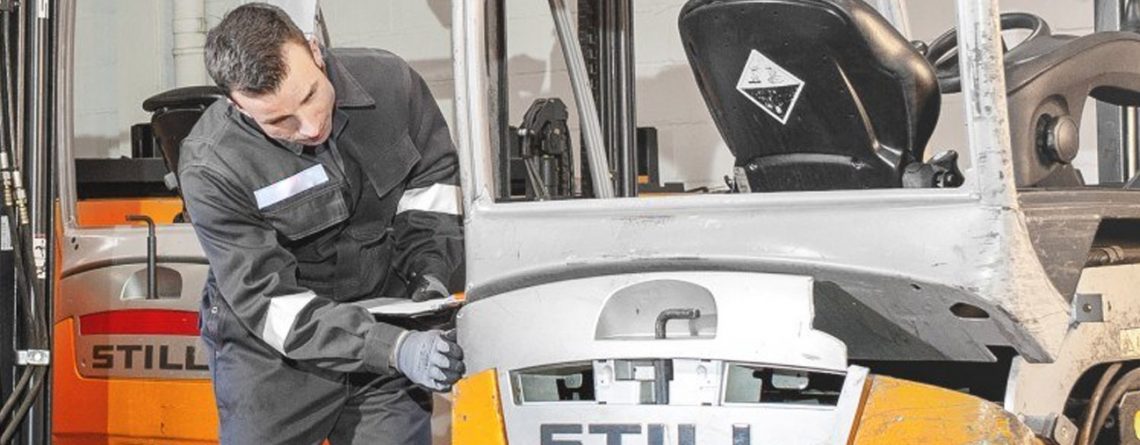
A thorough examination is a detailed inspection carried out by a competent person. It checks that the truck is safe to operate and meets legal requirements. You’ll receive a written report recording the condition of the truck and any defects found.
Regular servicing and thorough examinations work best together. A well-maintained truck is far more likely to pass its examination without the need for further repairs.
How often does a forklift need a thorough examination?
The frequency depends on how your truck is used:
- Every 12 months for a forklift used to lift loads only
- Every 6 months if the forklift is used to lift people, for example with an approved work platform
- Every 6 months for lifting attachments and accessories
An examination may also be needed after events that could affect safety, such as substantial repairs, modifications or an accident.
If you’re unsure how often your trucks need examining, our team can talk you through it.
What happens if you miss one?
Operating a forklift without a valid thorough examination puts your operators and your business at risk.
Undetected faults can lead to accidents and injuries. If an incident occurs, missing records could leave your business exposed to enforcement action from the Health and Safety Executive. It may also affect your insurance.
Keeping on top of examination dates and records is a simple way to protect your people and your operation.
What does a thorough examination check?
The exact checks depend on the truck, but an examination will typically look at:
- Mast, chains and forks
- Hydraulics and lifting mechanisms
- Brakes and steering
- Tyres and wheels
- Lights, horn and safety devices
- Seat belts and operator restraints
- Controls and warning systems
If a defect is found, it will be recorded in your report, along with any action needed and the timescale for completing it.
Book your thorough examination with Langley
At Langley, we were one of the first companies in the industry to be approved by the Fork Lift Truck Association to carry out thorough examinations.
Our 18 fully mobile engineers can examine any make or model of forklift truck at your site, with examinations starting from just £50 per truck. We can also arrange your routine servicing at the same time, with services from £45.
Need a thorough examination for your forklift fleet? Contact the Langley team on 01773 763 546 to book yours.


Leave a Reply